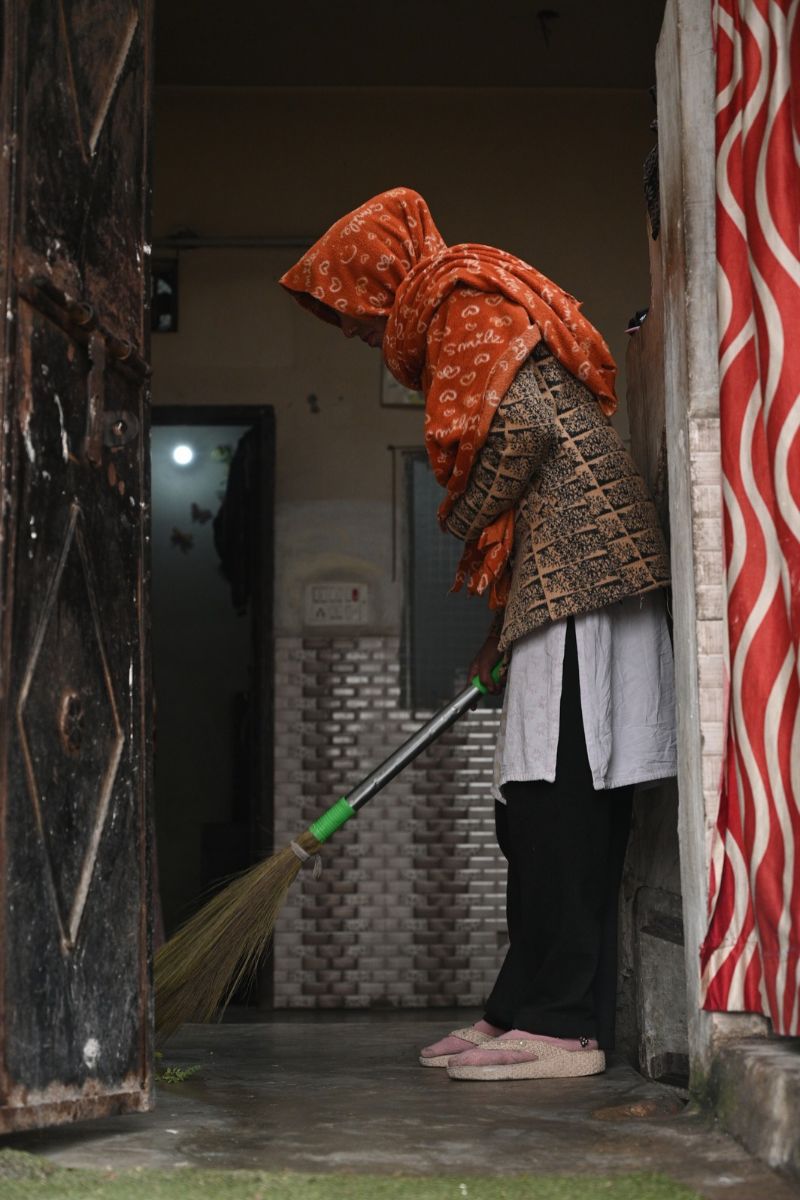
Domestic Workers
Domestic workers keep households running every day—cleaning, cooking, washing, shopping, and caring for children, older persons and people with disabilities. Yet this essential work is often low-paid, informal and without adequate social protection.
In India, domestic work is predominantly carried out by women—women account for nearly 80% of domestic workers, according to the International Labour Organization (ILO). In urban India, part-time domestic workers form the bulk of the labour market, with many working across multiple households.
The nature of their work can also mean long and unpredictable hours, low wages and limited employment security. Globally, the ILO reports that 81.2% of domestic workers are in informal employment, leaving many without adequate access to labour protections and social security.
SEWA Delhi works with domestic workers to strengthen their recognition as workers, access to fair wages and social protection, safer working conditions, skills and collective voice.
“I work in several homes to earn enough for my family, but if one employer stops giving me work, my income immediately falls. We need work that gives us dignity, security and a voice.”